Passage: Luke 1:1–4
Inasmuch as many have undertaken to compile a narrative of the things that have been accomplished among us, just as those who from the beginning were eyewitnesses and ministers of the word have delivered them to us, it seemed good to me also, having followed all things closely for some time past, to write an orderly account for you, most excellent Theophilus, that you may have certainty concerning the things you have been taught.
Devotion
As the prologue to his Gospel account (Luke 1:1–4) indicates, Luke did not produce his writings by means of a sudden lightning bolt strike of inspiration. Rather, through diligent research and effort, Luke set about to write his orderly account for the benefit of his patron’s faith. The Holy Spirit was superintending—to use a fancy theological term— throughout this process to be sure. But significantly, the Spirit did not diminish Luke’s unique personality and unique background, but rather cooperated with him in such a way that God’s infallible and inspired Word was expressed uniquely through Luke.
In Luke’s Gospel account, Peter’s mother-in-law did not just have a “fever,” but a “high fever.” And it wasn’t “a leper” that Jesus healed, but “a man full of leprosy.” Much like a physician today uses more precise language when discussing an illness, Luke’s medical background comes through in the way he records certain events in his Gospel account and in the Book of Acts. (In fact, Luke’s use of medical terminology corresponds precisely with what we find in the writings of Hippocrates and Galen, the best-known physicians of their time and near contemporaries of Luke.) Luke’s unique personal qualities, background, and gifting come through on every page.
Some 40 or more human authors wrote the Scriptures over a period of more than 1400 years. Yet through it all—from God’s command to Moses to “write” in the opening books of the Bible to Jesus’ directive to John to “write” in the Book of Revelation—we can be sure that what we see in the Bible is inspired, authentic, and profoundly “human.” Indeed, whether it is Luke’s literary Greek or Peter’s rough Greek (writing from a Roman prison as his execution neared, Peter did not have the luxury of working with a scribe to smooth out the language of his second letter), whether it be Paul’s profound theological discussions (some of which even Peter acknowledged “are hard to understand”) or James’ simple, in-your-face exhortations, such variety and “humanity” in the pages of the Bible—far from meaning that the Bible is filled with human errors or contradictions, as some “ignorant and unstable” teachers would like to believe (2 Peter 3:16)—is one of the remarkable features of God’s Word. But none of this should surprise us. Shouldn’t this be what we expect from the God who came to dwell with us in human flesh?
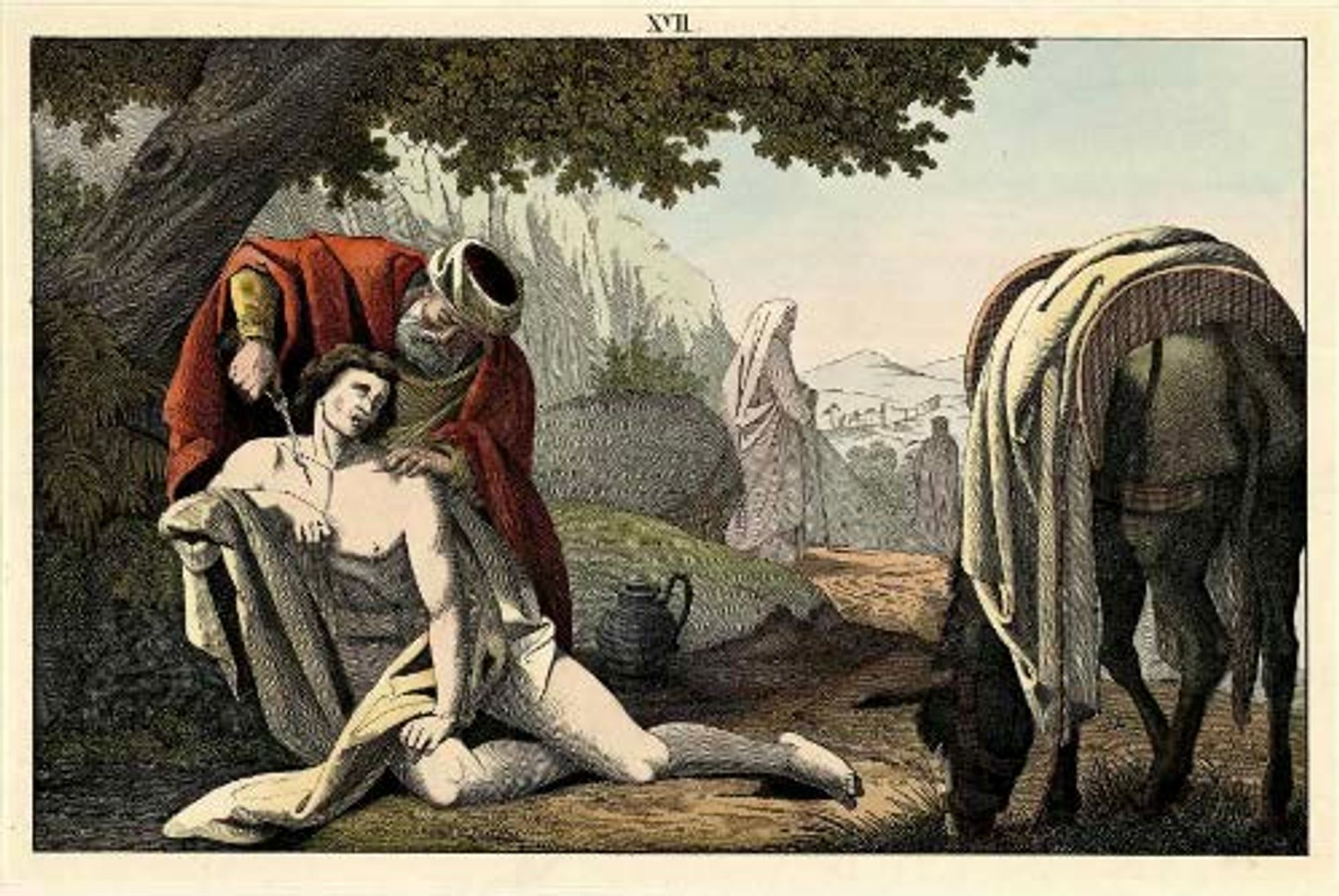
Hand-colored lithographs were popular in 19th-century publications. This one depicts the story of the Good Samaritan (Luke 10:25–37) and appeared in a two-volume set titled Biblical Pictures of the Old Testament and Biblical Pictures of the New Testament. It is thanks to Luke’s “doctorly” diligence and effort in writing an “orderly account” of Jesus’ life that we have not only the Parable of the Good Samaritan but also the Parable of the Prodigal Son, the birth narrative of John the Baptist, the story of Zacchaeus, and the account of the birth of the Church and Paul’s missionary journeys (see the Book of Acts). Luke’s background as a physician is apparent—even in the Parable of the Good Samaritan itself—in his use of medical language throughout his writing, an observation that highlights the human authorship of Scripture.
Reflection
Q1. What are the main themes or ideas of the Scripture passage?
Q2. What does this devotional tell me about who God is?
Q3. How does this devotional challenge or encourage me?
Q4. What specific action can I take to live out this teaching?
Q5. Who should I share this with for encouragement or accountability?

A fifteen-day pilgrimage through Ireland, Scotland, and England, following the saints, sites, stones, and stories of our Celtic and Anglican Christian heritage. Hosted by The Episcopal Church of the Transfiguration, Vail Valley, and led by Father Brooks Keith with special guest the Rev. Canon C.K. Robertson, Ph.D.

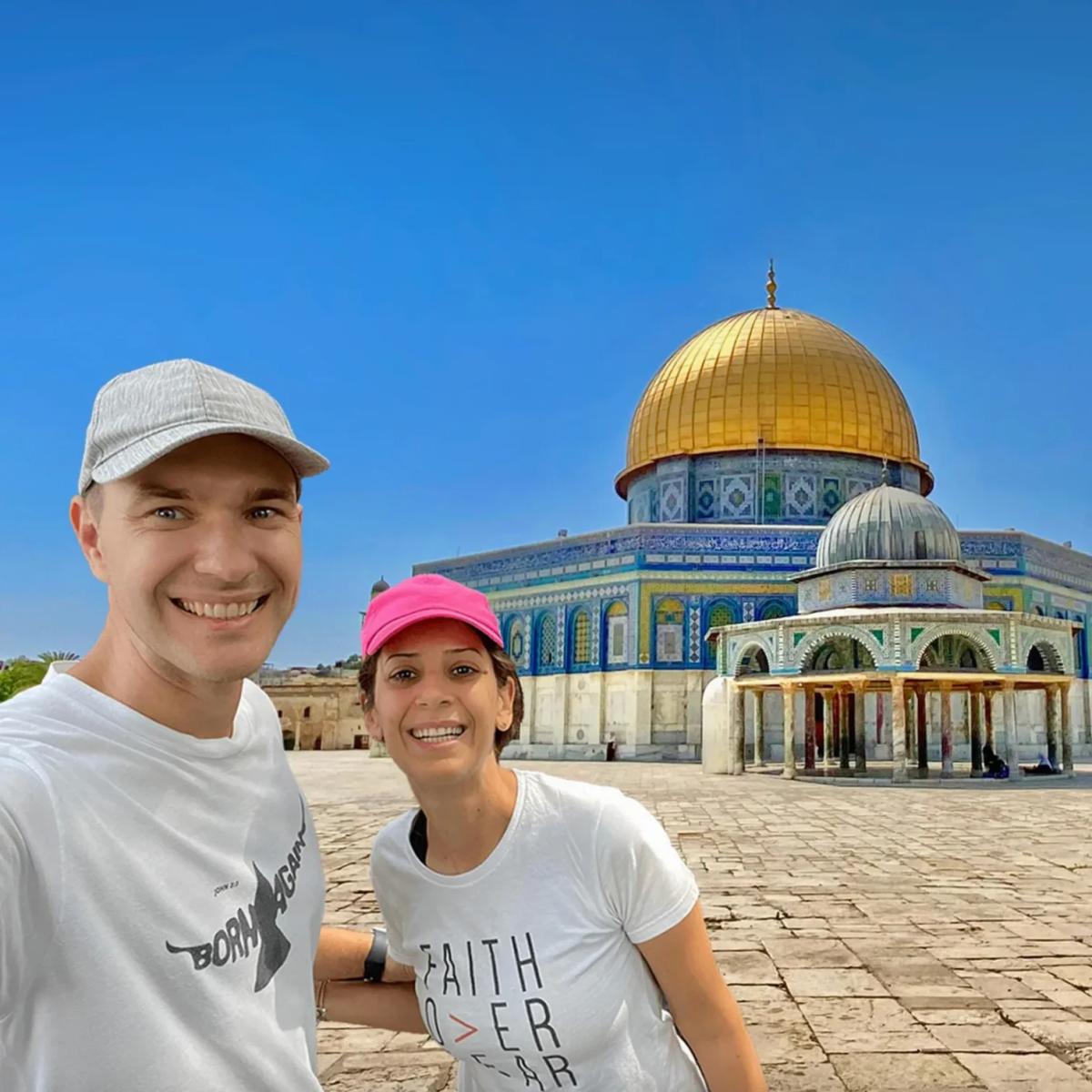


Inspire Guided Tours offers 90-minute, family-friendly guided experiences at the Creation Museum at 2800 Bullittsburg Church Rd, Petersburg, KY 41080. Our guides help guests understand key exhibits through a Scripture-first lens-connecting what you see to the truth of God’s Word in a clear, engaging way.
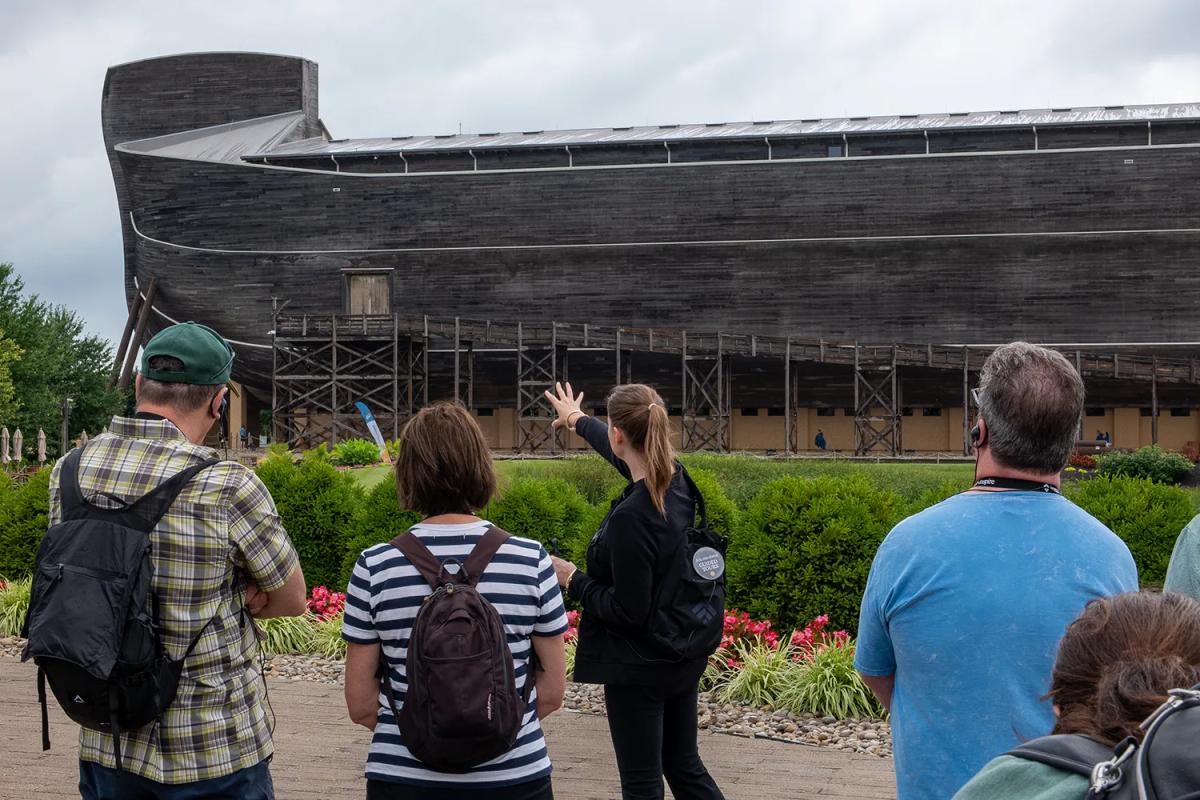
Inspire Guided Tours offers 90-minute, family-friendly guided experiences at the Ark Encounter at 1 Ark Encounter Drive, Williamstown, KY 41097. Our guides help guests understand key exhibits through a Scripture-first lens—connecting what you see to the truth of God's Word in a clear, engaging way.

Experience the Museum of the Bible like never before with Inspire's expert-led guided tours in Washington, D.C. Discover the history, impact, and story of the Bible through engaging, Christ-centered experiences designed to deepen your confidence in God's Word.