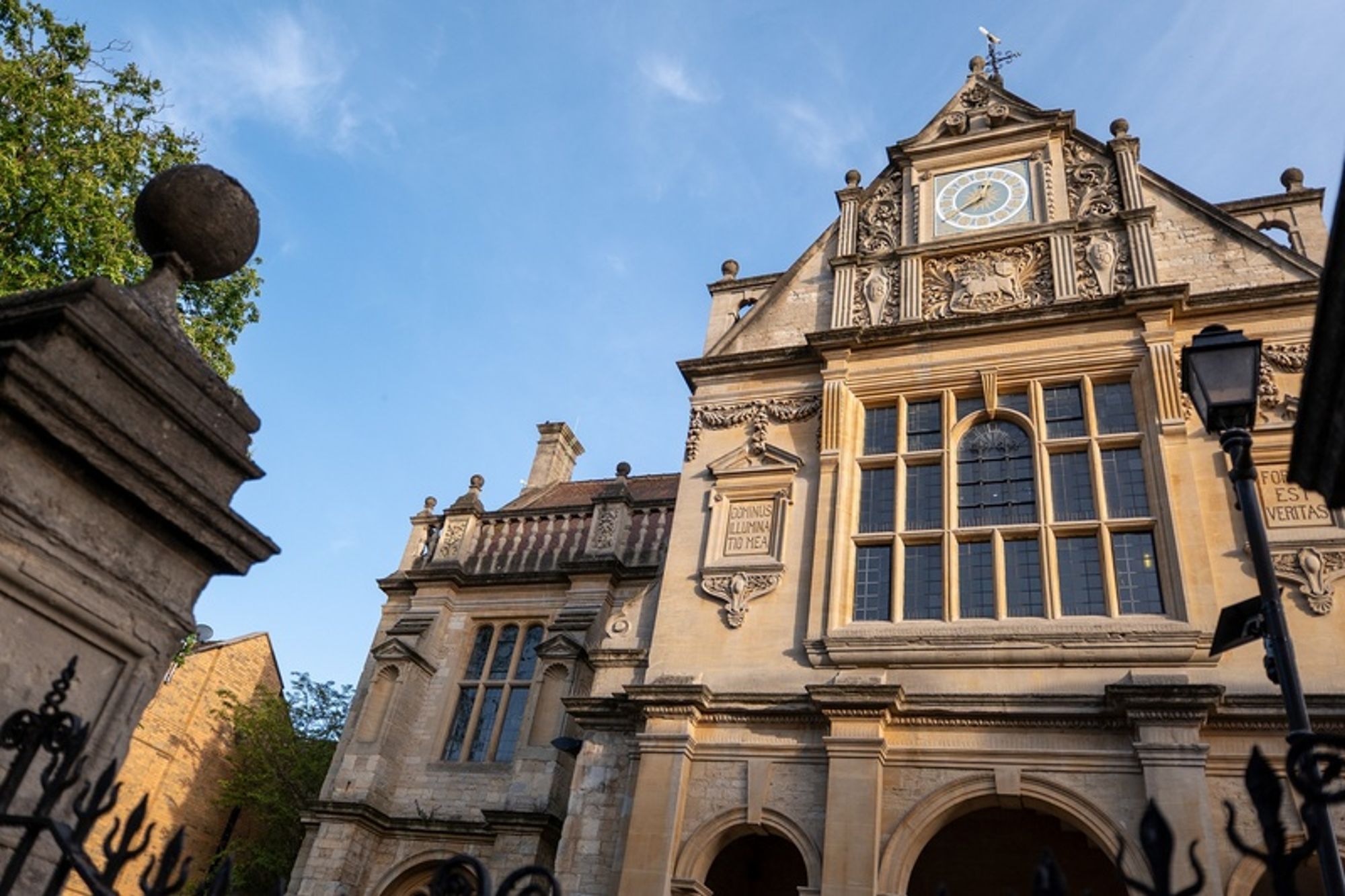
There is a Cross Embedded in the Road on Broad Street.
Most people step over it without looking down. It sits in the tarmac near the entrance to Balliol College — easy to miss if you're watching the spires, or the bookshop windows, or the tourists queueing outside the Bodleian. But if you know what you're standing over, you stop.
On October 16, 1555, two men — Bishop Hugh Latimer and Bishop Nicholas Ridley — were burned alive on this spot for refusing to deny what they believed about Scripture. Six months later, Archbishop Thomas Cranmer was brought to the same place and died in the same fire.
Oxford is one of the most beautiful cities in the world. It is also a city where people died for what you believe.
Walk it knowing both things.
The Story of Oxford
Oxford has been a university city since the 12th century and a city shaped by Scripture for almost as long. John Wycliffe taught theology at Balliol College in the 14th century and began the work of translating the Bible into English — the first attempt in history. The Church declared his teachings heresy. After his death, they dug up his bones and burned them. His ideas survived anyway.
Two centuries later, the Reformation arrived in England and Oxford became its most contested ground. The men who led the Protestant cause — Cranmer, Latimer, Ridley — were tried here, condemned here, and executed here, on the same street you can walk down today on the way to a coffee shop.
And then, in the 20th century, something unexpected happened. A group of friends — mostly Oxford academics, all of them writers — began meeting in a pub on Tuesday mornings to read each other's work aloud. One of them was a committed atheist who thought Christianity was a myth for people who hadn't thought hard enough. His name was C.S. Lewis. Another was a Catholic named J.R.R. Tolkien. Their conversations, and a late-night walk by the river at Magdalen College, led Lewis from atheism to Christianity — a conversion that produced some of the most widely read Christian writing of the 20th century.
Oxford is not done with its story. Walk it.
The Faith of Oxford
Wycliffe and the First Translation
Before Tyndale, before the King James Bible, before any official English translation existed, there was John Wycliffe — a Balliol College theologian who believed that Scripture belonged to every person in England, not just those who could read Latin. In the 1380s, he and his colleagues translated the entire Bible into Middle English for the first time in history.
The Church condemned it. Wycliffe was declared a heretic. His followers, called Lollards, were persecuted across England for decades. But handwritten copies spread through the country, passed hand to hand by people who risked imprisonment to read them. When Wycliffe died in 1384, the Church couldn't touch him. Forty-four years later, the Council of Constance ordered his bones exhumed from their grave and burned, his ashes scattered in the River Swift. It was meant to erase him.
It didn't work.
Stand outside Balliol College today and know whose classroom you're standing outside. The English Bible began here.
The Oxford Martyrs
The cross in the road on Broad Street marks the approximate spot where Latimer, Ridley, and Cranmer were burned. The Martyr's Memorial — the Gothic spire on St. Giles', a short walk north — was built in the 19th century to honor them. Most visitors photograph the spire. Most don't find the cross in the road. Find both.
Latimer and Ridley died together on October 16, 1555. As the fire was lit, Latimer spoke words that have been repeated from pulpits and printed in books for the five centuries since: "Be of good comfort, Master Ridley, and play the man. We shall this day light such a candle by God's grace in England as I trust shall never be put out." Ridley died quickly. Latimer died within moments. It was, by the standards of the day, swift.
Cranmer's death came six months later and is the more complicated story. Under sustained psychological pressure, he had signed recantations of his Protestant beliefs — documents that denied everything he had stood for. At the moment of his execution, in a final act of defiance he had prepared for in secret, he stretched his right hand into the fire first. The hand that had signed the recantations. He held it there, steady, until it was consumed.
"This hand," he said, "hath offended."
He died as a martyr. The recantations died with him. The English Bible he had helped make possible — the Book of Common Prayer, the authorization of Tyndale's work, the groundwork for the King James — lived on.
The University Church of St. Mary the Virgin
The University Church on the High Street is the oldest building of the University of Oxford. Thomas Cranmer was brought here to be publicly tried and condemned before his execution. He stood at the pulpit and was forced to recant his beliefs before the congregation assembled to watch.
Four hundred years later, C.S. Lewis stood at the same pulpit and preached a sermon called "The Weight of Glory." It is widely considered one of the greatest sermons of the 20th century — an argument for why the longings we feel for beauty, belonging, and significance are not distractions from faith but echoes of the world we were made for. He also preached here during the Second World War, in a sermon called "Learning in War-Time" — a case for why intellectual and spiritual life mattered even when civilisation seemed to be collapsing around it.
The same pulpit. Two men. Four centuries apart. Both speaking about what it costs to hold on to what is true.
Climb the tower. The view of Oxford's dreaming spires from the top is the finest in the city. Take your time getting there.
C.S. Lewis and the Inklings
Lewis came to Oxford in 1919 as a student and stayed for most of his adult life — eventually as a Fellow and tutor in English Literature at Magdalen College for nearly thirty years. When he arrived, he was a committed atheist: not casually skeptical but rigorously, argumentatively convinced that theism was intellectually indefensible.
What changed him was a conversation. Several conversations, really, stretched across years. But the night that counted happened in 1931, on Addison's Walk at Magdalen College — a quiet riverside path through water meadows on the edge of the college grounds. Lewis, Tolkien, and a third friend named Hugo Dyson walked and talked until three in the morning. Tolkien argued that myths — stories of dying and rising gods, of sacrifice and redemption — held genuine spiritual weight precisely because the human imagination was made in the image of a God who told a story. The Christian story, he said, was the myth that had actually happened.
Lewis cycled home in the early hours of the morning, unconvinced. Two weeks later, on a bus ride to Whipsnade Zoo, he described the moment of belief arriving "almost unwillingly, like a man who, after a long sleep, still lying motionless in bed, becomes aware that he is now awake."
He never went back.
The Inklings — Lewis, Tolkien, Charles Williams, and others — met every Tuesday morning at The Eagle and Child pub on St. Giles', and on Thursday evenings in Lewis's rooms at Magdalen. What they read to each other in those sessions became some of the most enduring Christian literature ever written: The Chronicles of Narnia, The Lord of the Rings, The Screwtape Letters, Mere Christianity.
Lewis left Oxford for Cambridge in 1954, but he returned to his home, The Kilns in Headington Quarry, until his death in 1963. He is buried in the churchyard at Holy Trinity Church in Headington — the church where he worshiped for the last years of his life. His grave is simple. It is always visited.
The Bodleian and the Word
The Bodleian Library — founded in 1602 and one of the oldest libraries in the world — holds over thirteen million items, including ancient biblical manuscripts, early printed Bibles, and the working documents of some of the most significant moments in the history of Scripture transmission. Duke Humfrey's Library, the oldest reading room in the building, dates from the 15th century.
C.S. Lewis spent hundreds of hours researching in that room. Tolkien worked there too. The painted ceiling above holds shields and mottos in Latin, most of them expressions of devotion to learning and to God.
The Bodleian has never lent a book. It never has, in over four hundred years. The only way to encounter what it holds is to come and sit in the room where it lives. There is something quietly right about that — the sense that some things cannot be taken elsewhere and consumed at a distance, but have to be entered.
Oxford University Press and the Bible
Oxford University Press has been printing the Bible continuously since 1675, making it one of the longest-standing publishers of Scripture in history. Its offices remain in Oxford on Great Clarendon Street, about twelve minutes' walk from the city center.
The Press was originally granted its Bible-printing licence as part of the Crown's effort to keep Scripture publication under careful oversight — a direct legacy of the Reformation battles fought on Broad Street a century earlier. Today it publishes more Bible editions than almost any other publisher in the world. The Bible in an English-speaking hotel room is almost certainly an OUP edition, or one shaped directly by OUP scholarship.
The building isn't open to general visitors, but knowing it's there — and what it has quietly done for five centuries — changes the walk past it.
Walking Oxford
Oxford rewards being on foot. The distances are short, the architecture rewards looking up, and the stories are embedded in pavements and walls rather than displayed behind glass. These four routes are designed to be used separately or combined across a day or two. Start with the Reformation Route. Let it set the tone for everything else.
The Reformation Route (approx. 30–40 minutes)
The route that makes Oxford a pilgrimage. Do this one first.
No other Oxford walking guide runs this route. This is the one that separates a visit to Oxford from an encounter with what Oxford means. Walk it slowly.
1. Balliol College
The gate in front of you marks one of the oldest colleges in Oxford, founded around 1263. John Wycliffe was Master of Balliol in the 1360s — a theologian of extraordinary intellectual force who became convinced that Scripture belonged not just to the clergy but to every person in England. He organized the first complete translation of the Bible into Middle English and gave it to his followers, the Lollards, to copy by hand and distribute throughout the country. The Church declared it heresy. When Wycliffe died in 1384, his ideas had already spread too far to suppress — so the Council of Constance ordered his bones exhumed forty-four years after his death and burned, his ashes scattered in the River Swift, to prevent any veneration of his remains. Thomas Fuller, a 17th-century church historian, observed the unintended consequence: "The Avon to the Severn runs, the Severn to the sea, and Wycliffe's ashes to the sea, shall spread his doctrine free." You can't enter Balliol without a ticket, but you don't need to. Stand at this gate and know: the English Bible began here, with a man who never saw it finished.
2. Martyr's Memorial (2 minutes north on St. Giles')
The Gothic spire rising from the traffic island on St. Giles' was designed by George Gilbert Scott and completed in 1843, modeled on the Eleanor Crosses built by Edward I to mark his queen's funeral procession. It was erected nearly three centuries after the events it commemorates — it took England that long to publicly acknowledge that what had been done on Broad Street was judicial murder, not lawful execution. Look at the three figures in their niches: Hugh Latimer on the left, Nicholas Ridley in the center, Thomas Cranmer on the right — Cranmer holding an open Bible, the object for which all three men died. Read the full inscription at the base. It ends with their condemnation for "their love for the truth," which is a precise description of what they were actually tried for. The memorial stands where the road forks, visible from multiple directions, unavoidable. That's appropriate. They were unavoidable too.
3. Broad Street — The Cross in the Road (3 minutes east along Broad Street)
Walk east along Broad Street from the memorial. Before you reach the main Bodleian entrance, look at the road surface on your left near the Balliol entrance. The cross is set into the tarmac — a small, paved cross marking the approximate spot where Latimer, Ridley, and Cranmer were burned. It is easy to miss. People walk over it every day, on their way to Blackwell's or the Bodleian or a coffee shop, without any idea of what is underneath their feet.
Latimer was so frail from age and imprisonment by the time he was brought here that he had to be helped to the stake. As the fire was lit he turned to Ridley and spoke the words that have been repeated in pulpits and printed in books for five centuries: "Be of good comfort, Master Ridley, and play the man. We shall this day light such a candle by God's grace in England as I trust shall never be put out." He died quickly. Ridley did not. Cranmer died six months later in the same spot, holding his right hand — the hand that had signed his recantations under pressure — in the fire first.
Stand over the cross long enough to mean it. Then walk on.
4. St. Michael at the Northgate (5 minutes north up Cornmarket Street)
The Saxon tower of St. Michael's has stood at the top of Cornmarket Street since approximately 1040 AD — making it the oldest building in Oxford by nearly two centuries. It survived the Norman Conquest, the Dissolution of the Monasteries, the Civil War, and nine hundred years of Oxford street life. When Thomas Cranmer was brought to Oxford for trial, he was held in the Bocardo Prison — a medieval gaol occupying the upper stories of the North Gate, directly attached to this tower. The gate was demolished in 1771 to widen the road, but the tower remains. Go inside: the church is small, quiet, and worth ten minutes. The small museum within the tower holds a door from the Bocardo Prison, among other artifacts. Cranmer sat behind a door like that, waiting — and in the waiting, found the resolve that produced the scene on Broad Street. The entry fee is modest. The room where the door is displayed is worth finding.
5. University Church of St. Mary the Virgin (4 minutes east on the High Street)
The oldest building of the University of Oxford has served for eight centuries as the place where the university gathered for occasions that mattered. Degree ceremonies were held here before the Sheldonian was built. The assembled academic community gathered here for significant events — which is why, when the authorities wanted to try Cranmer publicly and with full institutional gravity, they brought him here.
He was brought to this building twice in the proceedings against him. The second time — the morning of his execution, March 21, 1556 — he was expected to make a final public recantation before the crowd assembled to watch. Instead, he announced that everything he had signed under duress was false, that he had been lying, and that his right hand would go into the fire first. He was dragged from the pulpit and taken to Broad Street.
Four hundred years later, C.S. Lewis stood in the same pulpit and preached "The Weight of Glory" — a sermon arguing that the longings we feel for beauty, belonging, and transcendence are not distractions from faith but echoes of the world we were made for, and that the Christian promise is more staggeringly wonderful than we have allowed ourselves to imagine. The two sermons, from the same pulpit four centuries apart, are a conversation across time about what it costs and what it means to hold on to what is true.
Climb the tower. The view of Oxford's dreaming spires from the top is the finest in the city. Look down at Radcliffe Square directly below, the Bodleian to the north, Broad Street running west — and somewhere, in the road, the cross you stood over twenty minutes ago.
The Lewis Route (approx. 25–35 minutes)
For those who want to walk where a skeptic became a saint.
1. The Eagle and Child — 49 St. Giles'
The pub has been licensed since 1650, but it entered the history of Christian literature in 1933 when C.S. Lewis began meeting a group of Oxford friends here on Tuesday mornings to read their work aloud. The group — which included J.R.R. Tolkien, Charles Williams, Lewis's brother Warren, Owen Barfield, and others at various times — called themselves the Inklings. Go through the main bar to the small back room known as the Rabbit Room. This is where it happened: where Tolkien read early drafts of The Lord of the Rings, where Lewis read chapters of The Screwtape Letters and Mere Christianity, where Hugo Dyson is said to have thrown himself onto the sofa and groaned "Not another elf!" at a particularly long Tolkien passage. The room is small, low-ceilinged, unremarkable in its fittings. Sit in it and understand: The Chronicles of Narnia was first read aloud in this room, to these people, over a pint, on a Tuesday morning. Order something. Stay a while.
2. Blackwell's Bookshop — 48–51 Broad St
Founded in 1879 by Benjamin Henry Blackwell, this independent bookshop became one of the most famous in the world largely because of what is underneath it. The Norrington Room — excavated beneath the forecourt of Trinity College — holds three miles of shelving and roughly 250,000 books on a single underground level. Lewis spent considerable time here, browsing in the way only a person with strong opinions about books and no fixed agenda can browse. The shop above ground retains much of its original character across multiple connecting rooms. Browse the philosophy section, or the history of science, or the theology, or simply wander. The children's books in the basement are excellent. Lewis once observed that he could walk into a bookshop with no intention of spending money and leave considerably poorer. Blackwell's facilitates this condition with grace.
3. The Sheldonian Theatre — Broad St
Designed by Christopher Wren and completed in 1669 — his first major architectural commission, built before St. Paul's — the Sheldonian was constructed as the university's ceremonial hall. Lewis and Tolkien both attended their degree ceremonies here and returned for significant university occasions throughout their Oxford careers. The building's fence is topped by the famous Emperor Heads — large stone busts whose identities have been debated for centuries (they are not, despite popular belief, reliably identified as any specific Roman emperors). The current heads are modern replacements; the originals weathered to near-unrecognizability over the centuries. Look for them as you pass, then look up at the roofline: the proportions of the building are the real achievement. Wren had never built at this scale before. He worked it out on paper and it stood.
4. Bodleian Library — Broad St / Catte St
One of the oldest libraries in the world, the Bodleian holds over thirteen million items. Lewis used its reading rooms for years of research — including the work that underpinned The Allegory of Love, his major academic study, and much of the background reading for his apologetic works. Duke Humfrey's Library, the oldest reading room, dates from the 15th century; its painted ceiling and dark wood cases have barely changed in six hundred years. The Bodleian has never lent a book, in over four hundred years of operation — every item in the collection can only be read on-site, in the room where it lives. Lewis sat in these rooms; you can sit in the same chairs. Entry to the exhibition spaces is free; guided tours and access to Duke Humfrey's require booking in advance. For those who want to understand what the intellectual world Lewis inhabited actually looked like, there is no better room in England.
5. St. Mary's Passage — beside University Church on the High St
The narrow alleyway beside the University Church is worth entering specifically for the ornate wooden doors at the far end. Look carefully at the carved detail: a golden lion — Aslan — and two fauns nearby. Lewis walked past this passage for decades, fully aware of what he was looking at and quietly noting it. Turn around when you're standing at the doors: the old-fashioned lamp post behind you has a long-standing claim to being the visual inspiration for the lamp post in the middle of the snowy wood of Narnia. Whether the geography of Narnia maps precisely onto the geography of Oxford, Lewis was drawing on specific visual memories of specific Oxford streets. St. Mary's Passage is one of the places where you can feel the porousness between the world he lived in and the world he made.
6. Magdalen College and Addison's Walk — High St
Lewis held his fellowship at Magdalen for nearly thirty years, from 1925 to 1954. The college is open to visitors for an entry fee. Walk through the main gate, past the Great Tower, and find your way to the northeast corner of the grounds — past the deer park and through the grove of trees to Addison's Walk, a circular path along the River Cherwell through a water meadow. The path takes about fifteen minutes to complete at a comfortable pace.
On the night of September 19, 1931, Lewis walked this path until three in the morning with Tolkien and Hugo Dyson. Tolkien argued that pagan myths — the dying-and-rising gods, the sacrificed heroes, the redeemer figures — held genuine spiritual weight, not because they were false comforts but because the human imagination, made in the image of God, had been responding to a real truth all along. The Christian story was the myth that had actually happened. Something in that argument reached Lewis in a way that previous arguments had not. Two weeks later, on a bus ride to Whipsnade Zoo, the recognition arrived — not through argument but through something that felt more like waking up. He described simply knowing that Christ was real, in the way you know that you are awake.
Walk Addison's Walk at dusk if you can. The path through the trees and beside the river is quiet, often empty of other visitors, and has not changed.
The Iconic Route (approx. 28–35 minutes)
Best done at golden hour.
1. The Sheldonian Theatre — Broad St
Begin with Wren's first great work. The building was designed when Wren was still primarily a mathematician and scientist rather than an architect — he had never built at this scale before. The challenge of spanning the wide interior without internal load-bearing columns led him to devise a suspended timber ceiling system using mathematical principles from his scientific training. Stand back from the south facade and take in the full roofline against the sky, then look at the Emperor Heads along the fence and the carved stonework above the entrance. The building is not merely beautiful. It is evidence of a specific, rigorous mind working at the very edge of what it knew.
2. Bridge of Sighs, Hertford College — New College Lane
Walk east along Broad Street and turn right into New College Lane — the narrow stone lane that runs between the back of the Bodleian and the back of Hertford College. The sky-bridge appears overhead. Built in 1914 and designed by Thomas Jackson, it was modeled on the Rialto Bridge in Venice rather than the famous covered bridge whose name it has inherited; the Bridge of Sighs nickname is a popular misnomer that has stuck permanently. Stand underneath it and look up at the carved stonework. Then continue east along New College Lane — the lane itself, with its medieval stone walls and cobbles, is one of the best-preserved streetscapes in Oxford. New College is just ahead on the left, and the tree in its cloisters that Harry Potter fans come to find is easily located once you're inside.
3. Radcliffe Camera — Radcliffe Sq
The circular library in the center of Radcliffe Square was built between 1737 and 1749, funded by the bequest of physician John Radcliffe. It is now a reading room of the Bodleian and not open to general visitors — but standing in Radcliffe Square and looking at it is one of the definitive Oxford experiences. The dome, the columns, the proportions: there is nothing quite like it in England. Walk slowly around the full circumference of the square. The Bodleian's Old Schools Quad closes it to the north; St. Mary's Church closes it to the south; Brasenose College closes it to the west. The Camera sits in the center of all of it, perfectly lit in afternoon light, looking more permanent than the road it sits on.
4. University Church of St. Mary the Virgin — High St
The University Church has been in this precise location since the 13th century, though the current building spans multiple later periods. Go inside and find the stairs to the tower — they are steep and the passage is narrow. The climb takes about five minutes. At the top, look north toward the Bodleian and the Sheldonian. Look west toward Broad Street. Look east along the High Street toward Magdalen Tower. Look south toward Christ Church Meadow. This is the view Matthew Arnold saw when he wrote of Oxford's "dreaming spires" — a phrase that has followed the city ever since and that becomes comprehensible only from up here. The Baroque porch on the south facade of the church, with its twisting columns and the "Virgin and Child" statue in the niche above, is visible from the street below. Find it on your way out.
5. Christ Church and Cathedral — St. Aldate's
Enter through Tom Tower on St. Aldate's — the gate tower Christopher Wren designed in 1682 to complete a gateway begun by Cardinal Wolsey over a century earlier, left unfinished when Wolsey fell from royal favor in 1529. The bell housed in the tower is Great Tom, a 6.75-ton bell that rings 101 strokes every evening at 9:05pm — 101 for the original number of scholars at the college, five minutes past nine because Oxford sits west of Greenwich at a longitude that puts it five minutes behind London time. The Great Hall upstairs served as the visual inspiration for the Hogwarts Great Hall; it is the original, and it is finer than the film version. The Cathedral is the smallest in England — a college chapel that doubles as the Cathedral of the Oxford Diocese. Inside, look for the medieval stained glass in the Latin Chapel, and the monument to Robert King, the last Abbot of Osney and first Bishop of Oxford, whose appointment marked the cathedral's foundation in 1546.
6. Carfax Tower — Queen St / Cornmarket St / St. Aldate's / High St
All that survives of the medieval Church of St. Martin, demolished in 1896 to widen the road junction at Oxford's center. The name comes from the Norman French carrefour — crossroads — and this has been the crossing point of Oxford's four main streets since the Roman road grid beneath the modern city was first laid down. The tower can be climbed for views over central Oxford; the junction at its base gives you, in a single 360-degree turn, the complete orientation of the city. Cornmarket runs north to St. Michael's. The High Street runs east to Magdalen. St. Aldate's runs south to Christ Church. Queen Street runs west toward the castle. Everything you have walked today radiates from this point.
The Relaxed Route (approx. 30–40 minutes, plus time inside each stop)
A slower morning, on purpose.
1. Blackwell's Bookshop — 48–51 Broad St
Begin a relaxed morning at Blackwell's and mean it — which means not giving yourself a time limit. The shop has been on Broad Street since 1879 and has expanded through adjacent buildings over the decades; what looks like a modest shopfront conceals a substantial labyrinth of rooms across multiple floors, leading eventually to the Norrington Room, a vast underground space beneath the Trinity College forecourt with three miles of shelving. There is no recommended route. Wander toward whatever draws you. The staff are unusually knowledgeable. The theology section is strong. The first editions room upstairs rewards careful browsing. Budget for purchases you did not plan to make.
2. Museum of Natural History — Parks Rd
The Neo-Gothic building on Parks Road, opened in 1860, is one of the finest Victorian natural history museums in England — and one of the most historically significant rooms in the history of science. The famous Oxford debate between Thomas Huxley and Bishop Samuel Wilberforce over Darwin's On the Origin of Species took place here in June 1860, weeks after the museum opened, drawing an audience of around a thousand people to one of the defining intellectual confrontations of the 19th century. The building itself was designed explicitly to express the compatibility of scientific inquiry and Christian faith — its carved stone capitals bear botanical decorations from specific plant species, its ironwork is shaped like plant stems, and the whole structure argues in architectural language that studying nature is a form of worship. The central hall, with its iron-and-glass roof, the dinosaur skeletons along the central nave, and the stained glass windows along the upper galleries, is one of the great Victorian interiors in England. Free to enter. Allow as long as you like.
3. The Covered Market — between High St and Market St
The market has operated continuously since 1774, when Oxford's street traders were moved into this purpose-built covered structure to clear the roads. It is not a tourist market — it exists primarily for the city rather than for visitors, which makes it a different and better kind of place. The cross-shaped arrangement of passages holds butchers who know their provenance, a fishmonger, bakers, several excellent cafés, and a particular smell of sawdust and fresh produce that has not changed in the better part of three centuries. It is one of the few places in central Oxford that feels like the city rather than the university. The iScream Gelateria serves its signature flower-shaped gelato in the center of the market; Wicked Chocolate nearby makes handmade truffles and rich hot chocolate from single-origin beans.
4. Oxford Botanic Garden — Rose Ln, off High St
The oldest botanic garden in the United Kingdom, founded in 1621 on the bank of the Cherwell beside Magdalen College. It was established as a Physic Garden — a collection of medicinal plants for use in the university's medical teaching — and has grown over four centuries into a collection of over 5,000 species from across the world. The walled enclosure is entered through a Baroque gateway designed by Nicholas Stone in 1633; the contrast between the stone arch and the living abundance inside it is immediate and restorative. The garden is divided between the formal walled sections near the entrance and the wilder riverside areas further in. On a clear morning the light through the glasshouses is extraordinary. Philip Pullman set some of the most significant scenes of His Dark Materials in this garden — Lyra and Will's final meeting takes place at a specific bench here, which the garden acknowledges with characteristic Oxford understatement. Allow a full hour. Bring no agenda. Sit somewhere and look at what grows.
Narnia in Oxford
In St. Mary's Passage — the narrow alleyway beside the University Church — look for a set of ornate wooden doors. Find the Golden Lion carved into the wood. That's Aslan. The two fauns are perched nearby. Then turn around when you're standing at the doors: the old-fashioned lamp post behind you has a long-standing claim to being the visual inspiration for the lamp post in the middle of the snowy wood of Narnia.
Lewis walked past this passage for decades. He knew exactly what he was looking at.
Can You Find...?
A few things most Oxford visitors never notice — worth looking for.
The Nine Muses — Look to the rooftops of the Bodleian Library to find the Nine Muses, daughters of Zeus. They distinguish themselves by the objects they hold.
The Three Martyrs — The spire near Balliol on St. Giles'. It honors Cranmer, Latimer, and Ridley — the three men who met a fiery end for their faith in the 1550s.
The Baroque Porch — On the south facade of the University Church of St. Mary the Virgin. Find the 1637 porch with its distinctive "Virgin and Child" statue framed by twisting columns.
A Taste of Venice — The ornate sky-bridge connecting two parts of Hertford College. Oxford's version of the Bridge of Sighs. There's a Harry Potter film connection nearby — find the familiar tree in the New College Cloisters.
The Scholar's Stroll — The peaceful path behind Christ Church, where the city noise disappears and the meadow begins.
Site Spotlights
Key sites in Oxford worth seeking out on your own:
- The Martyr's Memorial and Broad Street Cross
- The Bodleian Library
- University Church of St. Mary the Virgin
- Christ Church and Cathedral
- The Eagle and Child
- Magdalen College and Addison's Walk
- The Kilns — C.S. Lewis's Home
- Holy Trinity Church, Headington — Lewis's grave
- Oxford University Press
Where to Stay
Oxford is compact. Both properties below are on or just off Broad Street — which means the Martyr's Memorial is visible from the pavement outside, and the Bodleian is a three-minute walk. Location doesn't get more fitting than this.
Signature Collection: The Store Oxford
1–5 Broad St, Oxford OX1 3AG
A beautifully converted former department store, directly on Broad Street. Step outside the entrance and look right: the Martyr's Memorial. Look left: the Bodleian gate. The room you sleep in is a few hundred meters from where Cranmer was burned. There is no more fitting address in Oxford for the purpose of this guide.
thestoreoxford.com | +44 1865 950666
Signature Collection: The Randolph Hotel, a Graduate by Hilton
Beaumont St, Oxford OX1 2LN
A Victorian Gothic landmark that has anchored Beaumont Street since 1866. It carries the weight of the city's history without being heavy about it. A short walk to everything. Worth having a drink in the bar where Graham Greene, Margaret Thatcher, and Bill Clinton have all sat.
hilton.com/graduate-oxford | +44 344 879 9132
Dining
Oxford rewards wandering more than planning. But a few places are worth going to specifically.
The Eagle and Child — 49 St Giles' St
Not primarily a dining destination — a devotional one. Come for a pint, not a meal, and sit in the Rabbit Room at the back. Order something, and stay awhile. This is where The Chronicles of Narnia was read aloud for the first time.
The Covered Market — Between High St and Market St
Established in 1774 and still running. Lunch here is the right Oxford move. Find iScream Gelateria for the flower-shaped gelato, or Wicked Chocolate for handmade truffles and proper hot chocolate.
The White Horse — 52 Broad St
A narrow, ancient pub wedged between Blackwell's and the Bodleian. One of Oxford's oldest. Order something and sit near the window looking out at Broad Street. You're on the right street for thinking about things that matter.
The Bear Inn — 6 Alfred St
Licensed since 1242. The tie collection on the walls — over 4,500 of them, many cut from Oxford college ties — is an Oxford institution. Simple food, deep history.
The Old Parsonage Hotel — 1 Banbury Rd
For a proper afternoon tea or a special dinner. Oscar Wilde was a regular during his time at Magdalen. A few minutes north of the center but worth the walk.
A Moment for the Journey
Thomas Cranmer held his right hand in the fire first because that was the hand that had signed the recantations. He had failed once under pressure. He wanted to be clear, at the end, about where he actually stood.
Most of us will never be asked to hold our hand in a fire. But we are regularly asked, in much quieter ways, to recant — to go silent when we should speak, to soften what we actually believe, to sign something that keeps the peace at the cost of the truth.
Cranmer's final act is not primarily about courage. It is about what happens when someone who failed gets a second chance to be faithful. He took it.
What are you being asked, right now, to quietly recant? And what might it look like to hold firm instead?
"Be watchful, stand firm in the faith, act like men, be strong." (1 Corinthians 16:13)
Experience Oxford with Inspire
Oxford is one of those cities that gives more the longer you stay and the more you know. This guide is built to help you arrive already knowing — so that the cross in the road stops you, the Rabbit Room means something, and Addison's Walk at dusk feels like the ground it is.
But there is a version of Oxford that opens differently. After-hours access to the Bodleian. A guest lecture over a rooftop lunch above the city's skyline. A guided C.S. Lewis walk with someone who knows the stories inside out.
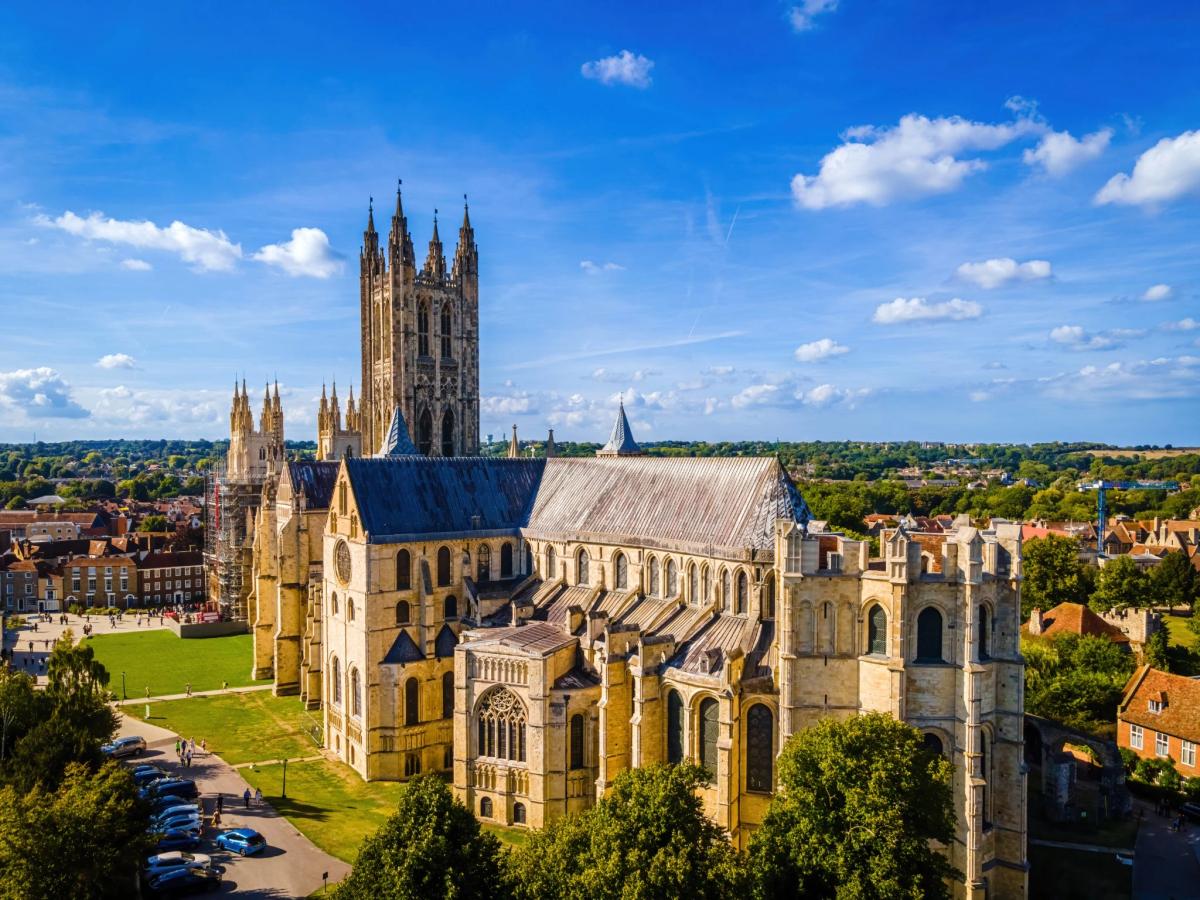
A fifteen-day pilgrimage through Ireland, Scotland, and England, following the saints, sites, stones, and stories of our Celtic and Anglican Christian heritage. Hosted by The Episcopal Church of the Transfiguration, Vail Valley, and led by Father Brooks Keith with special guest the Rev. Canon C.K. Robertson, Ph.D.

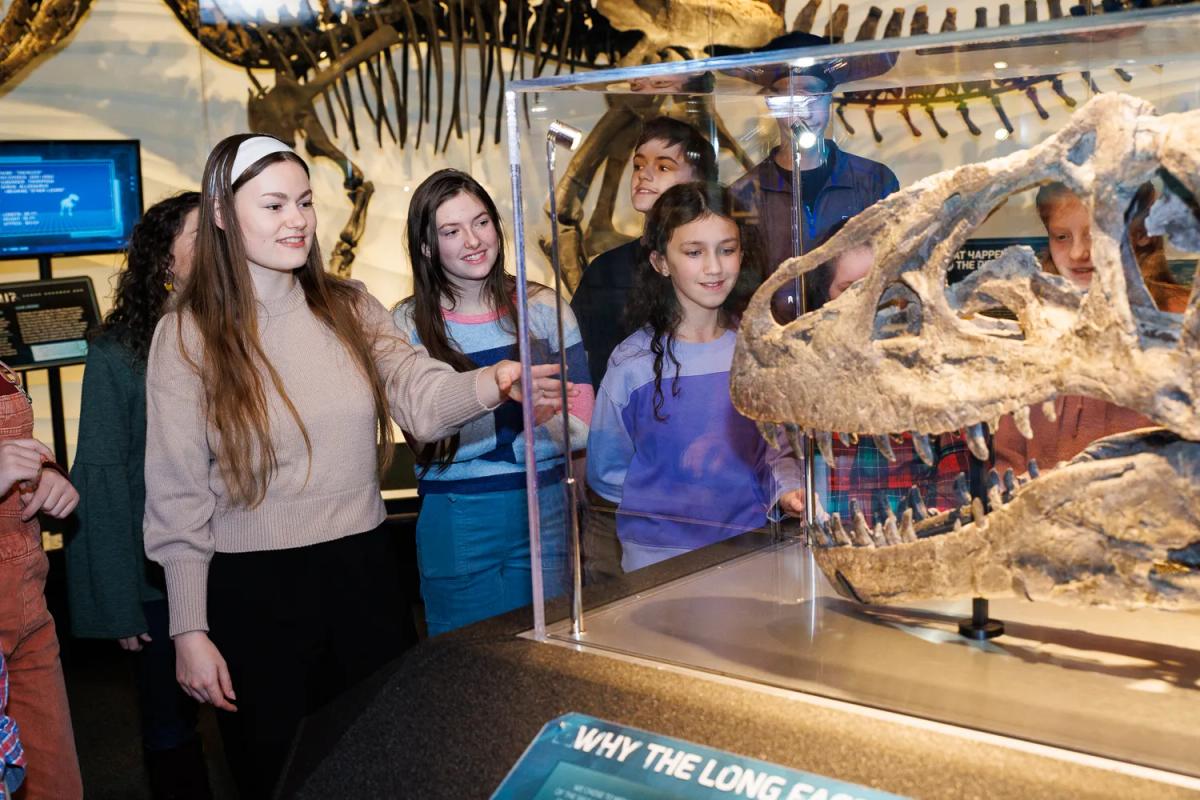
Inspire Guided Tours offers 90-minute, family-friendly guided experiences at the Creation Museum at 2800 Bullittsburg Church Rd, Petersburg, KY 41080. Our guides help guests understand key exhibits through a Scripture-first lens-connecting what you see to the truth of God’s Word in a clear, engaging way.
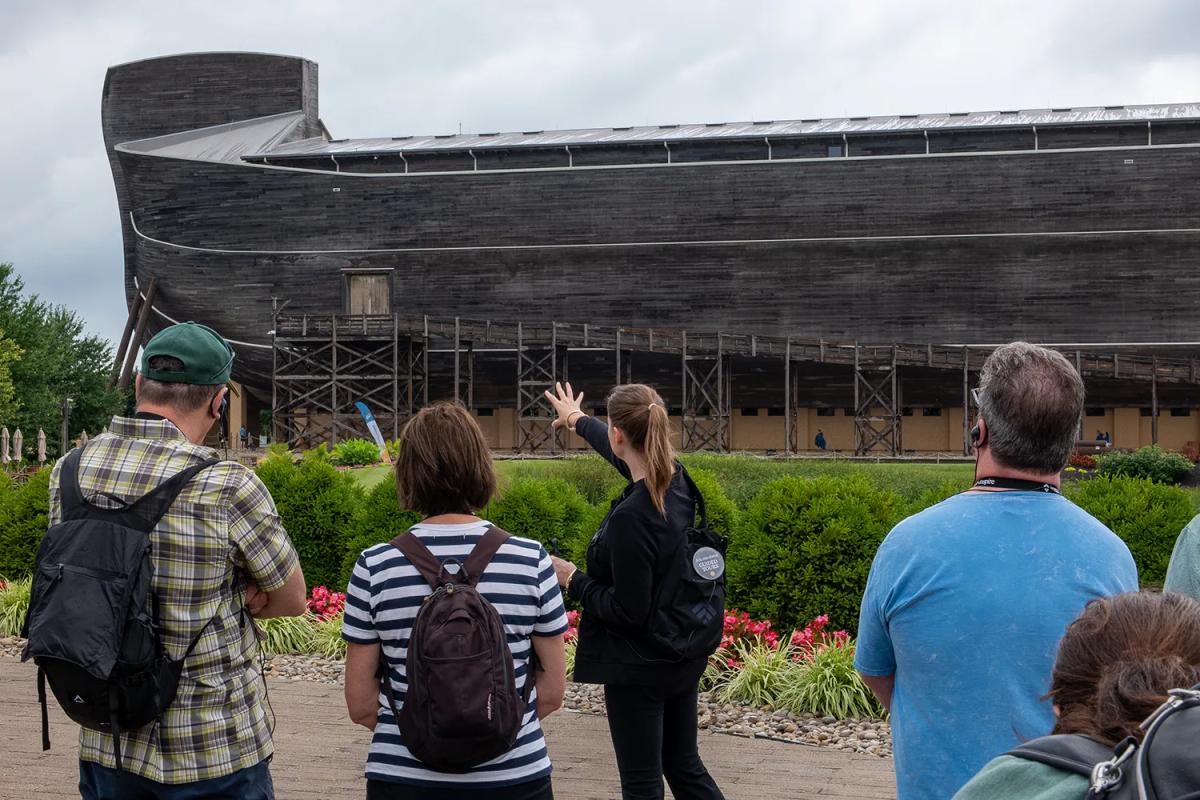
Inspire Guided Tours offers 90-minute, family-friendly guided experiences at the Ark Encounter at 1 Ark Encounter Drive, Williamstown, KY 41097. Our guides help guests understand key exhibits through a Scripture-first lens—connecting what you see to the truth of God's Word in a clear, engaging way.
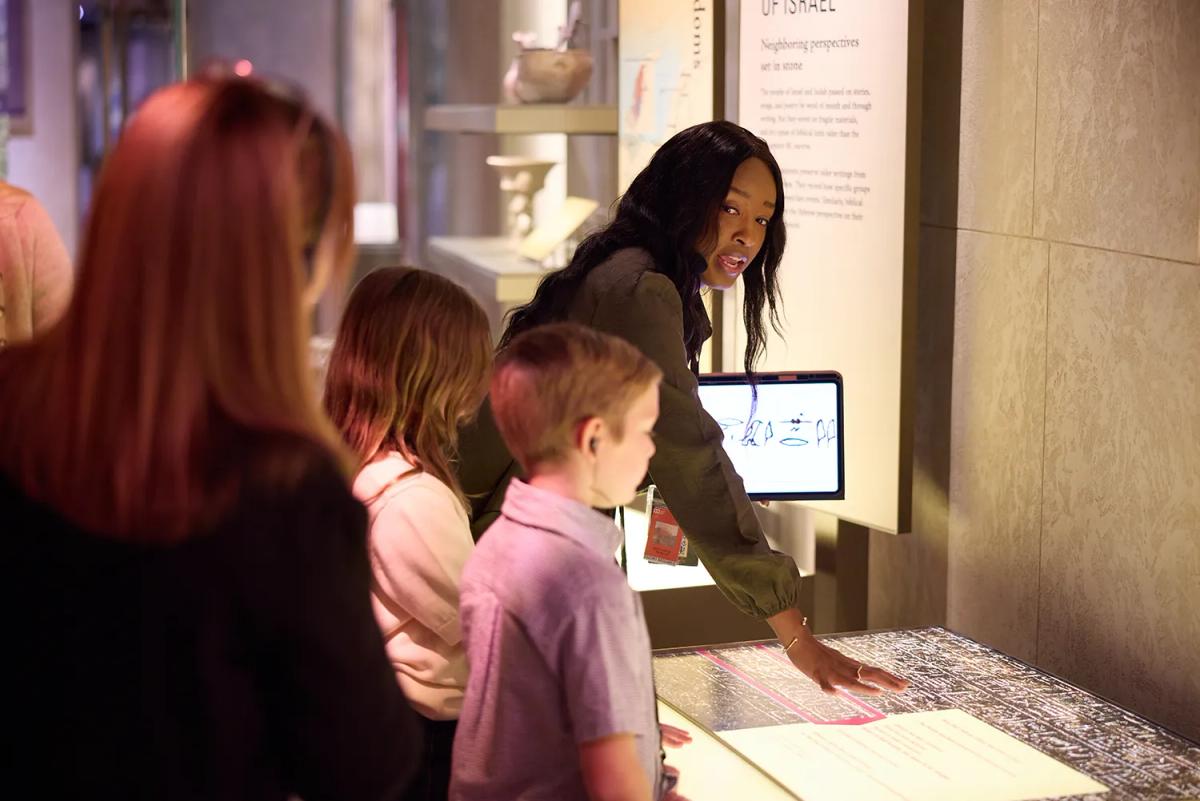
Experience the Museum of the Bible like never before with Inspire's expert-led guided tours in Washington, D.C. Discover the history, impact, and story of the Bible through engaging, Christ-centered experiences designed to deepen your confidence in God's Word.